Objective
Help children ages 3–5 build the foundations for reading and math through a world they want to explore — not a worksheet in disguise.
Guiding principle“Learning is the purpose; play is the medium.”
01Play is a spectrum
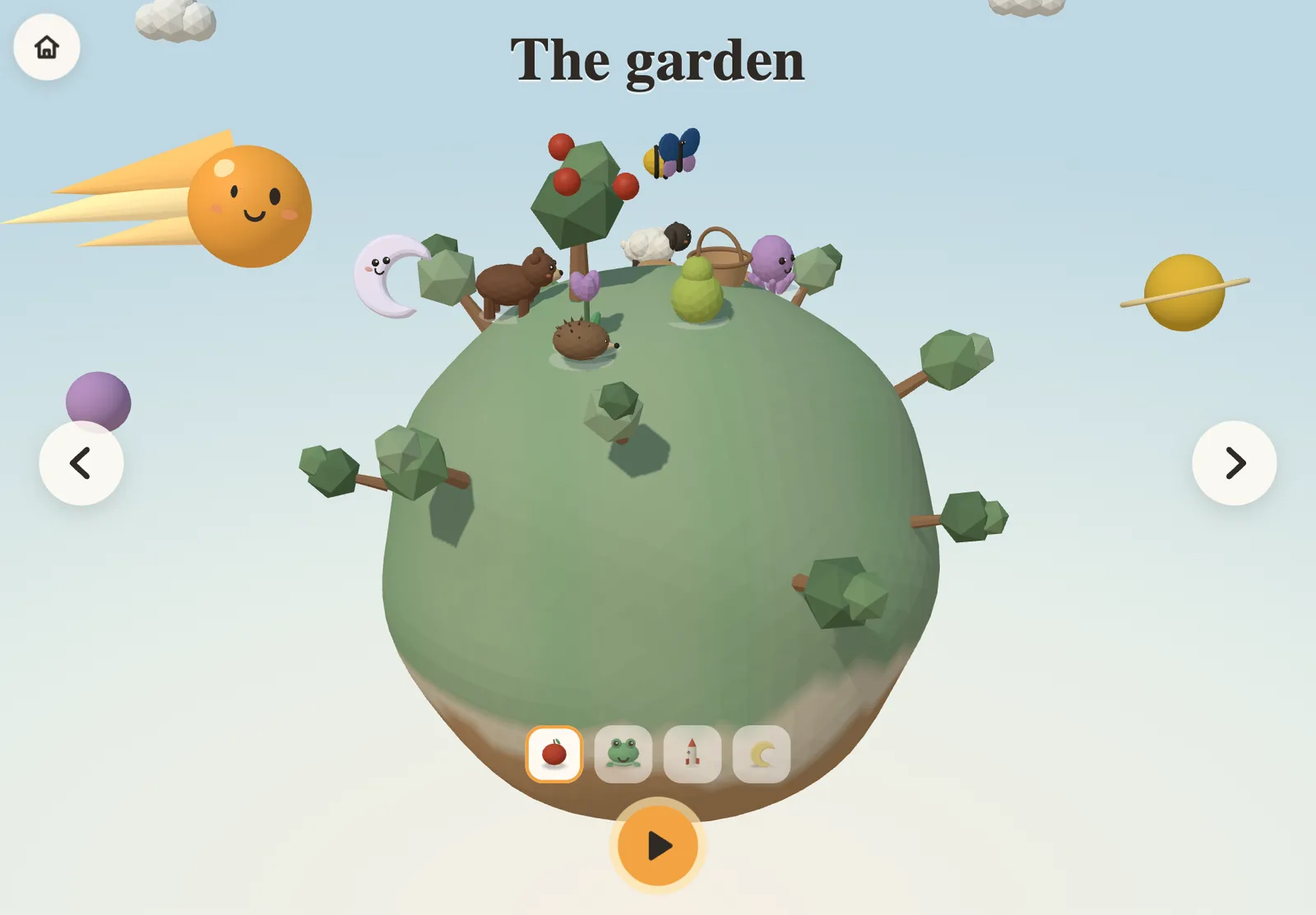
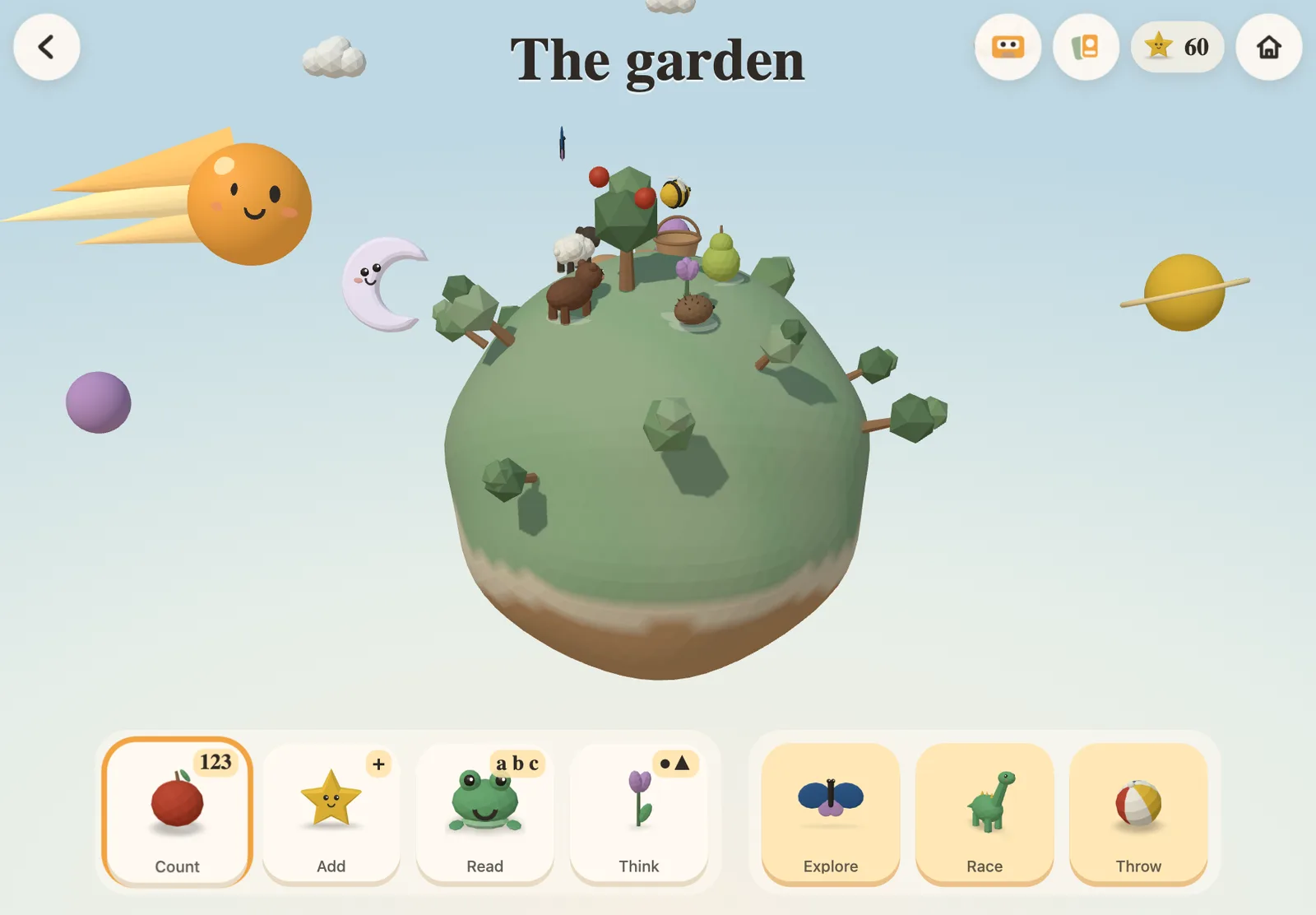
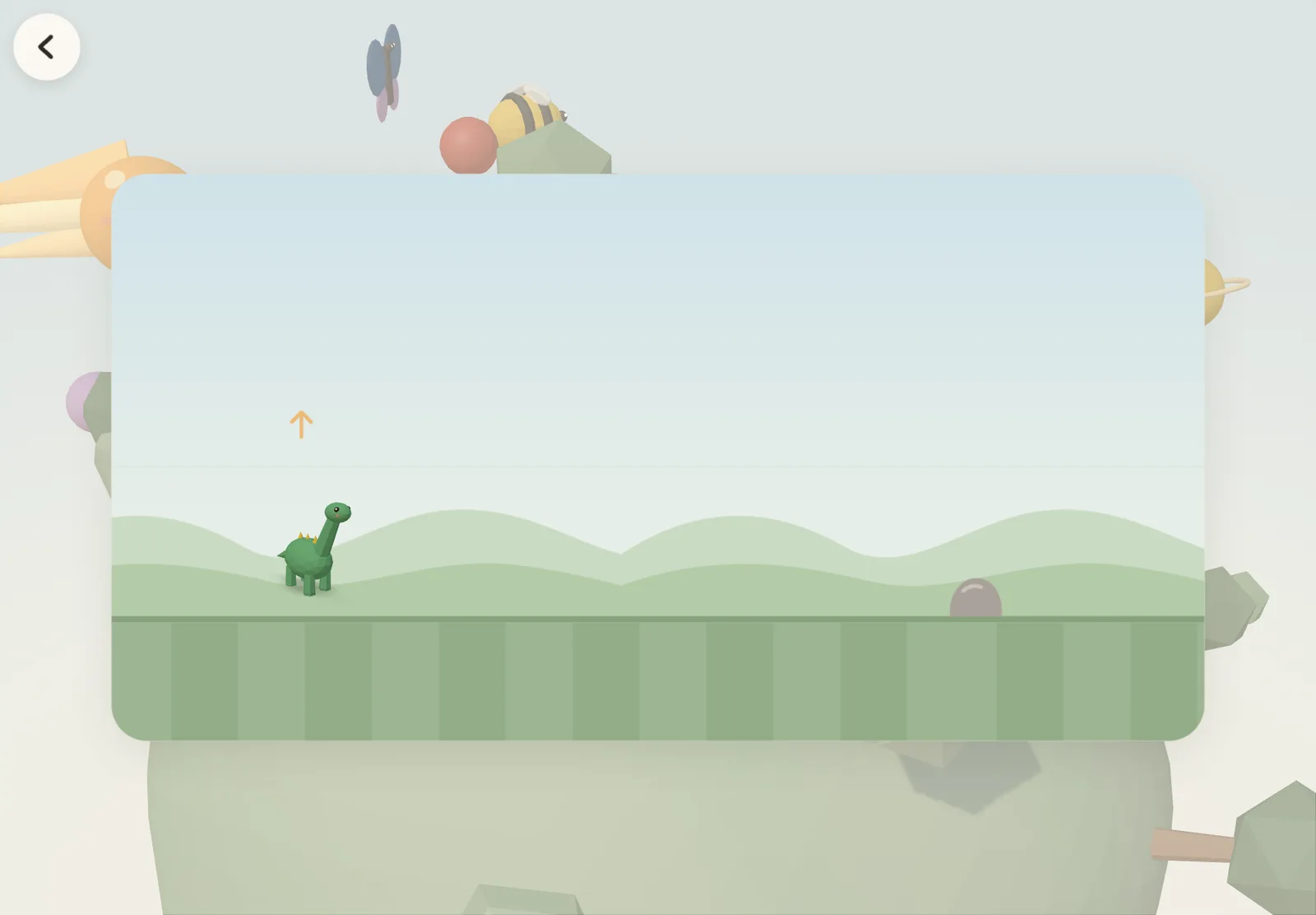
Children learn across free play, guided play and games with rules. Cometa mixes all three: free exploring, invitations born from play, and short action games — so learning never feels like a toll before the fun.
Zosh et al., 2018 · Frontiers in Psychology
02Autonomy, competence, connection
What keeps kids coming back isn't points but choosing for themselves, feeling capable and caring about the characters. The child picks what to do, every mission ends well, and Cometa and Lumi are there to talk to.
Ryan, Rigby & Przybylski, 2006 · Motivation and Emotion
03Guided play
The child keeps the freedom to explore, while the world is arranged so every mission has an intentional learning goal. Guided play beat direct instruction on early math and shape knowledge in a 2022 meta-analysis.
Skene et al., 2022 · Child Development
04The four pillars of learning
Every activity has to be active, engaged, meaningful and socially interactive — the bar for calling an app educational, not just digital.
Hirsh-Pasek et al., 2015 · Psychological Science in the Public Interest
05Concrete → visual → symbol
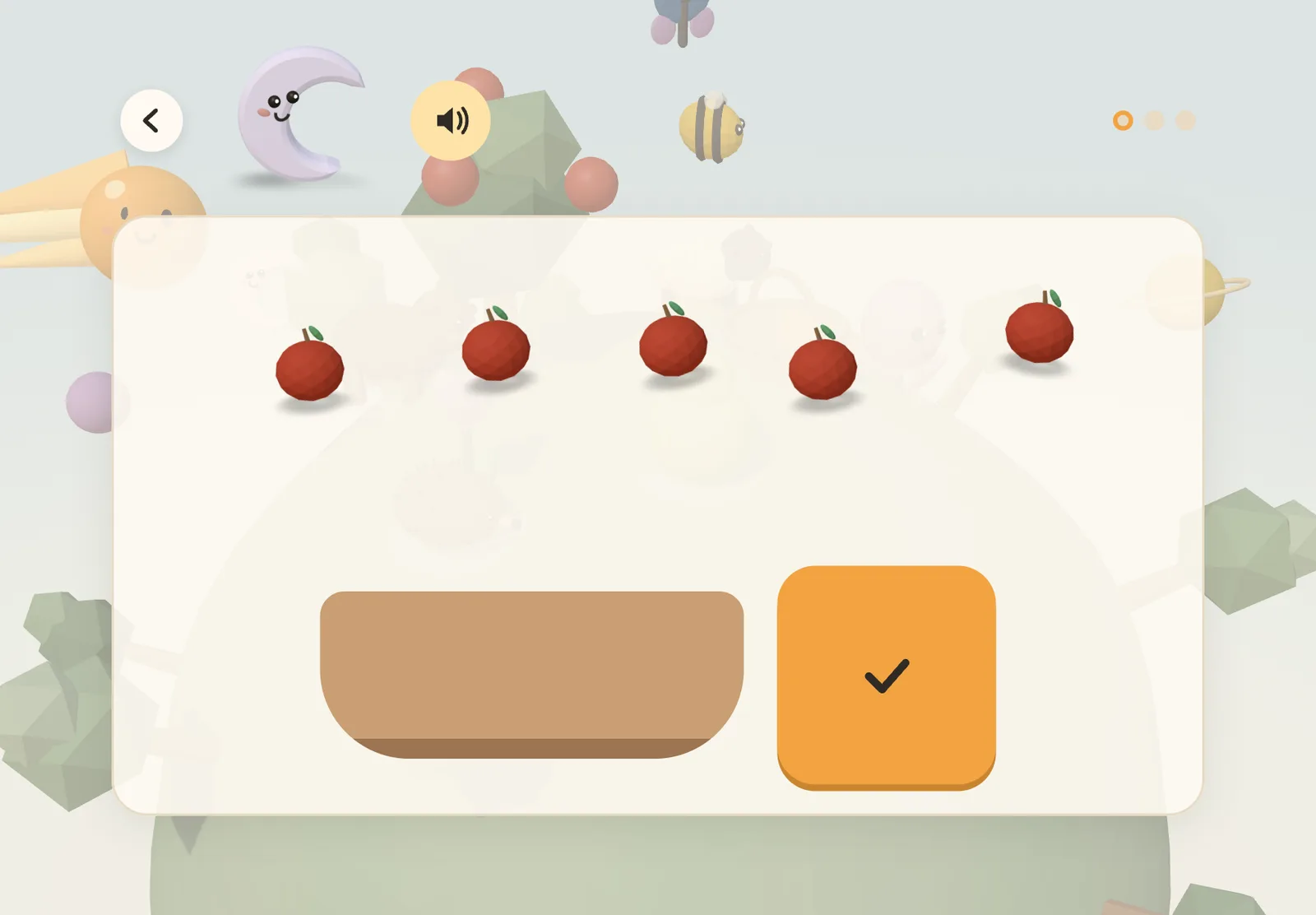
Children join real pieces first, see them as dots, and only then as 3 + 2 = 5. The symbol arrives after the experience, following research-based learning trajectories for number sense.
Clements & Sarama · Learning and Teaching Early Math: The Learning Trajectories Approach
06Syllables first, in Spanish
Spanish is a transparent language: letters map consistently to sounds and syllables are easy to hear, so children can decode early with small units. Reading grows from listening, to syllables, to letters and sounds — not from an English phonics template.
Ziegler & Goswami, 2005 · Psychological Bulletin (psycholinguistic grain size theory)
07Mastery with scaffolding
A skill counts as learned only when the child succeeds without help, in different contexts, on different days. A mistake triggers a ladder of help — retry, hint, partial model, demo, solve together — never a “wrong” screen.
Wood, Bruner & Ross, 1976 · Journal of Child Psychology and Psychiatry · Vlach & Sandhofer, 2012
08Calm by design
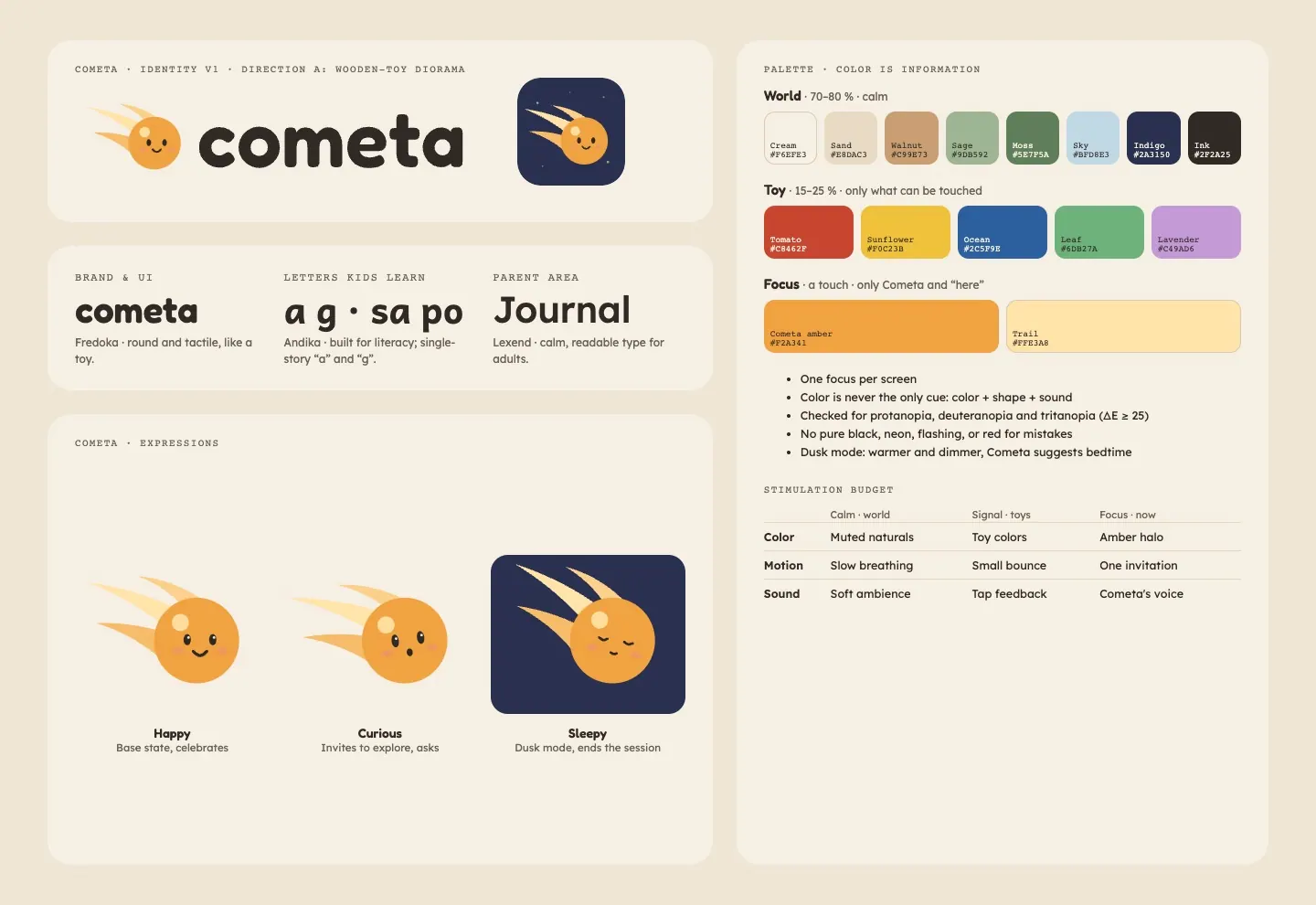
Kindergartners in a heavily decorated classroom spent more time off task and learned less. Cometa keeps the world calm, uses color as information and allows one focus per screen.
Fisher, Godwin & Seltman, 2014 · Psychological Science